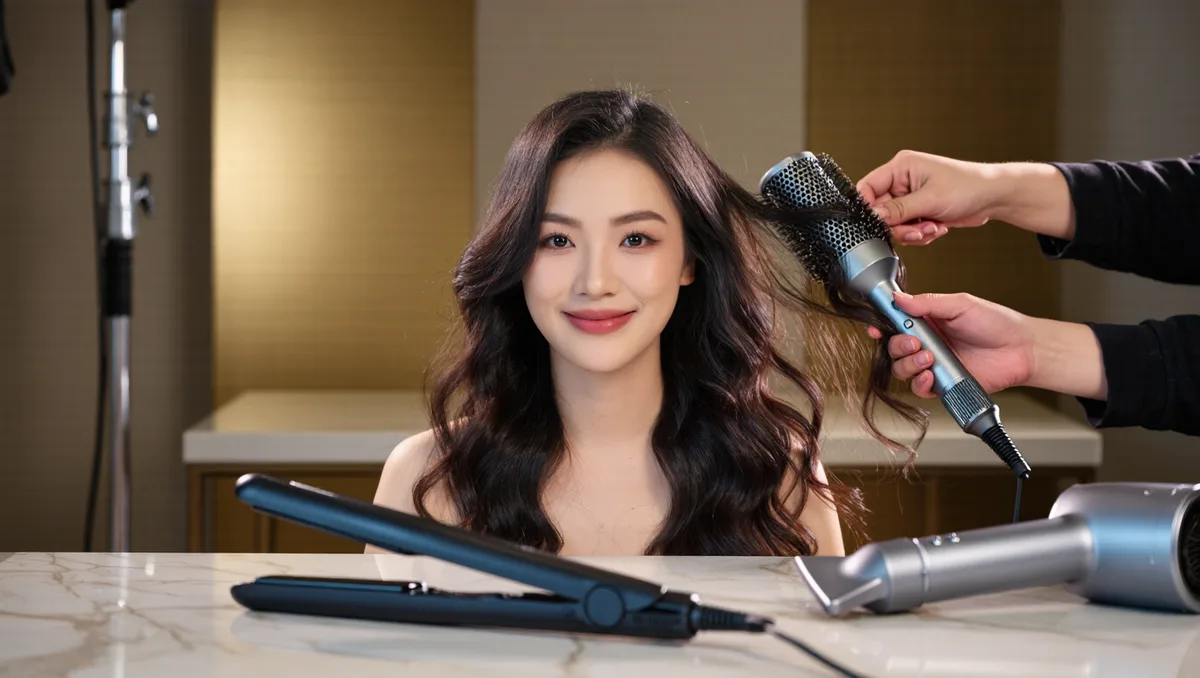
The right hair tool is the one matched to your texture. Straight hair usually needs a dryer and a brush. Curly and coily hair does best with low, steady heat and wide spacing between bristles or plates. Fine hair needs the least heat of all, because the strand itself is thin and heat damage shows fast.
Price is the wrong starting point. A mid-priced tool with the right plate material, heat settings, and bristle spacing will beat an expensive one built for a different texture. Below, each texture gets its own shortlist, and each tool type gets an honest note about what it can and cannot do. Readers following this should also see Retinol strength: why a higher price is not more power.
What decides how your hair behaves?
Texture is not a marketing category. It is geometry. According to Wikipedia's overview of hair, the shape of the follicle determines the shape of the cortex, and the shape of the fiber is related to how straight or curly the hair is — people with straight hair tend to have round fibers, while oval and other cross-sections generally mean wavier or curlier hair.
That geometry matters when you pick a tool. A round fiber lies flat under a smooth paddle brush. A flat, oval, or irregular fiber bends at every point, which is why curly hair tangles under dense bristle rows and why a wide-tooth comb or a brush with spread-out bristles moves through it without pulling. Strand diameter matters too: Wikipedia notes human hair diameter varies widely, from roughly 0.017 to 0.18 millimeters, and that average diameters differ across ancestry groups. Thin strands scorch sooner. Thick, dense hair needs more heat and more time, which is a different problem.
Which dryer suits your texture?
The dryer is the foundation tool. Almost every other tool works on hair that is already dry or nearly dry, so how you dry sets the outcome.
- Fine or thin hair: use a lower heat setting and keep the dryer moving. You are removing moisture, not styling with force. A concentrator nozzle helps you aim airflow at the roots for lift without blasting the lengths.
- Straight to wavy hair: a standard dryer plus a round brush or paddle brush does the job. Work in sections so the brush, not the airflow, does the smoothing.
- Curly hair: high heat and rough airflow break up curl patterns and raise frizz. A diffuser attachment spreads the air over a wider area and lets curls dry in place. Low heat, low speed, patience.
- Coily hair: sections and tension work best, whether that is a comb attachment or stretching the hair gently while it dries. Direct high heat held close to the strand is where damage starts.
What this means for your budget: the attachment matters as much as the motor. A basic dryer with a diffuser and a concentrator covers more textures than a premium dryer with neither.
Brushes: which bristle for which hair?
Brushes look interchangeable. They are not.
- Paddle brushes suit straight and wavy hair, especially longer lengths. The wide flat base smooths without adding curl.
- Round brushes are for styling while blow-drying. A smaller barrel bends in more movement; a larger barrel smooths and adds gentle volume. Fine hair usually wants the larger barrel and less tension.
- Wide-tooth combs and detangling brushes are the default for curly and coily hair, especially wet. Dense bristle rows grab irregular fiber shapes; spaced teeth do not.
- Wet brushes with soft, flexible bristles work across textures as a gentle everyday option, though they will not style hair into a shape the way a round brush under a dryer will.
A dry aside: the brush with the prettiest handle is rarely the one your texture asked for.
Irons and hot tools: what does each one actually do?
Flat irons press hair straight between two heated plates. Curling irons and wands wrap hair around a heated barrel. Hot brushes combine the two, heating while brushing. Each has a texture it treats kindly and a texture it punishes.
- Flat irons: best on straight-to-wavy hair that wants a sleek finish, and on curly hair only in small sections with a heat protectant. Coily hair needs multiple slow passes at moderate heat; fast, hot passes are what cause breakage.
- Curling irons and wands: easiest on hair that already holds a bend. Very straight, coarse hair resists the shape and needs more heat, which means more stress on the strand.
- Hot brushes and hot-air brushes: gentler by design, because the heat is spread across bristles rather than clamped between plates. A reasonable middle path for fine and wavy hair, and a lower-risk option for anyone nervous about irons.
Plate and barrel material is the spec worth reading. Ceramic spreads heat evenly, which matters on fine hair. Titanium heats fast and runs hot, which suits thick, coarse hair more than fragile strands. Adjustable temperature beats a single fixed setting, because you can start low and only raise the heat if the hair genuinely needs it.
How should you spend by budget tier?
Our analysis, based on what the specs actually control: spend on features, not on branding.
- Lower budget: a reliable dryer with two or more heat settings plus a concentrator, and a wide-tooth comb or a basic paddle brush. This combination covers most textures adequately.
- Middle budget: add the texture-specific attachment — a diffuser for curls, a good round brush for straight styles — and, if you use hot tools, an iron with adjustable temperature and ceramic or titanium plates matched to your strand thickness.
- Higher budget: justified mainly by motor quality, faster heat recovery, and better temperature control on irons. If a premium tool does not offer adjustable heat, it is not the premium pick for your texture, whatever the price.
One caution that crosses all tiers: heat damage is cumulative and the visible shaft of the hair is not living tissue, as the Wikipedia anatomy overview explains — the living part sits in the follicle beneath the skin. Burned lengths do not heal. Start at the lowest effective temperature and add heat only when needed.
What this means before you buy
Match the tool to the fiber, not the trend. Straight hair: dryer, paddle or round brush, and a flat iron used sparingly. Wavy: the same kit with a hot brush as a low-effort option. Curly: diffuser, wide-tooth comb, and irons only for occasional stretch styles. Coily: sectioned drying with tension, spaced teeth, and the gentlest heat settings you can get away with.
Check the return window before you commit, especially on hot tools, because the feel of a tool on your own texture is the one thing no spec sheet tells you. And if a salon finish is what you are after, it can be worth comparing what a stylist charges against what the tool costs — the same math we applied to salon versus box dye over a year applies here. Prices and availability change, so verify both before you buy. We covered a connected angle in Salon vs box dye: what a year of each really costs.