A $14 retinol serum with 0.3 percent retinol can be stronger on your skin than a $90 cream labeled with a bigger number, because strength depends on the form of vitamin A, not the price or the percentage alone. Over-the-counter retinoids have to be converted by skin enzymes into the active form, and every conversion step loses potency, while prescription tretinoin is already active. Read the ingredient list, not the marketing, and the price ladder stops making sense.
What are the retinoid forms, strongest to weakest?
Dermatology literature, including a widely cited overview of retinoids in skin aging published in Clinical Interventions in Aging (Mukherjee et al., 2006), orders the family roughly like this:
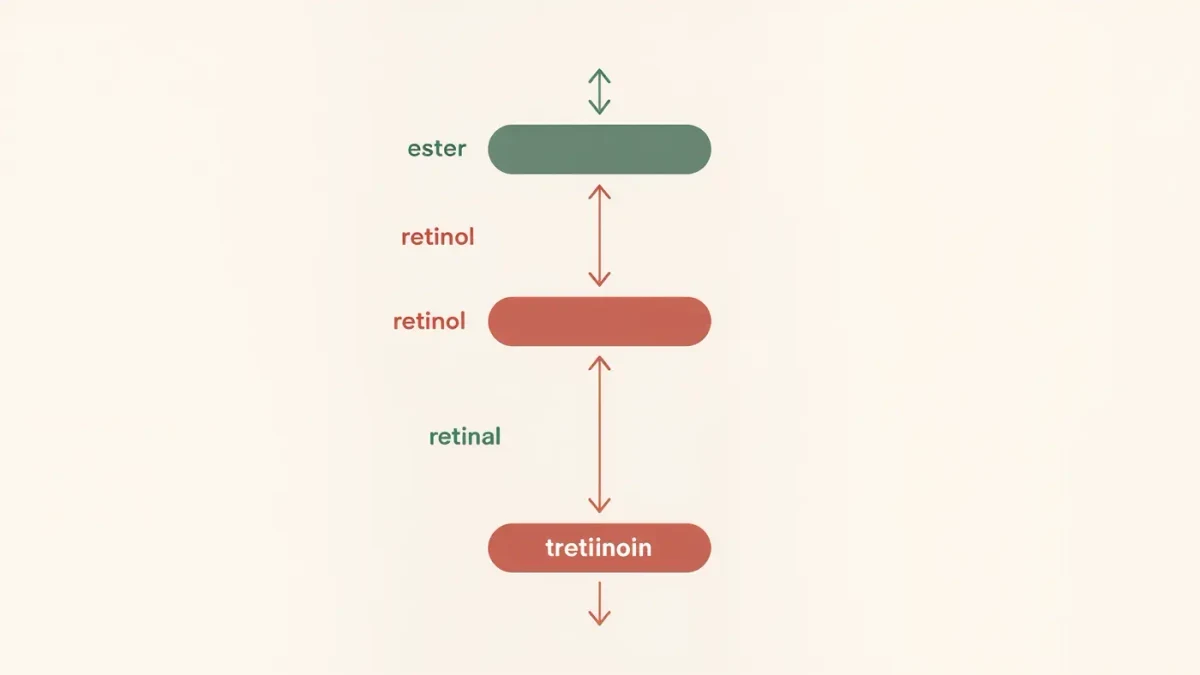
- Tretinoin (retinoic acid): the active form. Prescription only in the United States. No conversion needed.
- Adapalene: a synthetic retinoid available OTC at 0.1 percent gel in US drugstores since 2016, when the FDA approved the switch from prescription status.
- Retinol: converts to retinaldehyde, then to retinoic acid. Effective, but each step loses strength.
- Retinaldehyde (retinal): one conversion step away from active. Found in mid-price serums.
- Retinyl palmitate and other retinyl esters: three conversion steps away. The gentlest and the weakest — and frequently the star ingredient of expensive "age-defying" creams.
That last line is the core of the price myth. A luxury cream can list retinyl palmitate prominently, charge a premium for the word retinol on the box, and deliver a fraction of the activity of a drugstore serum built on actual retinol.
How does the conversion ladder work?
Skin must convert every non-prescription retinoid into retinoic acid before it does anything. Retinyl palmitate becomes retinol, which becomes retinaldehyde, which becomes retinoic acid. The published dermatology review cited above describes this enzymatic pathway and notes that conversion efficiency is imperfect at each step. Practically, that means percentages are not comparable across forms: 1 percent retinyl palmitate is not "stronger" than 0.3 percent retinol, because the two start the ladder at different rungs.
Brands exploit the ambiguity. "1 percent retinol complex" or "retinol blend" can hide a proprietary mix where the ester dominates. Flip the box over: on the INCI list, retinol and retinyl palmitate appear as separate ingredients, and ingredient order roughly tracks concentration within reason.
What should you expect to pay?
As illustrative, honestly marked US retail examples rather than quotes of current prices: well-reviewed drugstore retinol serums in the 0.25–1 percent range have commonly sold in the $10–$30 band as of 2025, adapalene 0.1 percent gel has listed around $9–$15 for a 15 gram tube, and prestige "retinol" moisturizers have listed from $80 to well over $200. Where the price rises, what usually rises with it is the vehicle — the base formula, packaging that protects the retinol from light and air, and brand overhead — not the retinoid itself.
That does not mean expensive products are a scam. An elegant base can mean less irritation and better tolerability, which matters, since dermatologists consistently note that irritation is the main reason people abandon retinoids. But you should know you are paying for comfort and packaging, not for a stronger molecule.
Which percentages make sense to start with?
Dermatologists writing for general audiences, including guidance summarized by Mayo Clinic on tretinoin use, emphasize starting low and slow to manage irritation rather than chasing strength. For OTC retinol, that usually means 0.25 or 0.3 percent applied a few nights per week, buffered by moisturizer, before considering higher strengths. Adapalene 0.1 percent is a reasonable OTC step for people comfortable with retinoids, per its FDA OTC labeling. The jump from 0.3 to 1 percent retinol is smaller than the jump from retinol to tretinoin — a form change, not a percentage change.
Does expensive packaging matter for retinol?
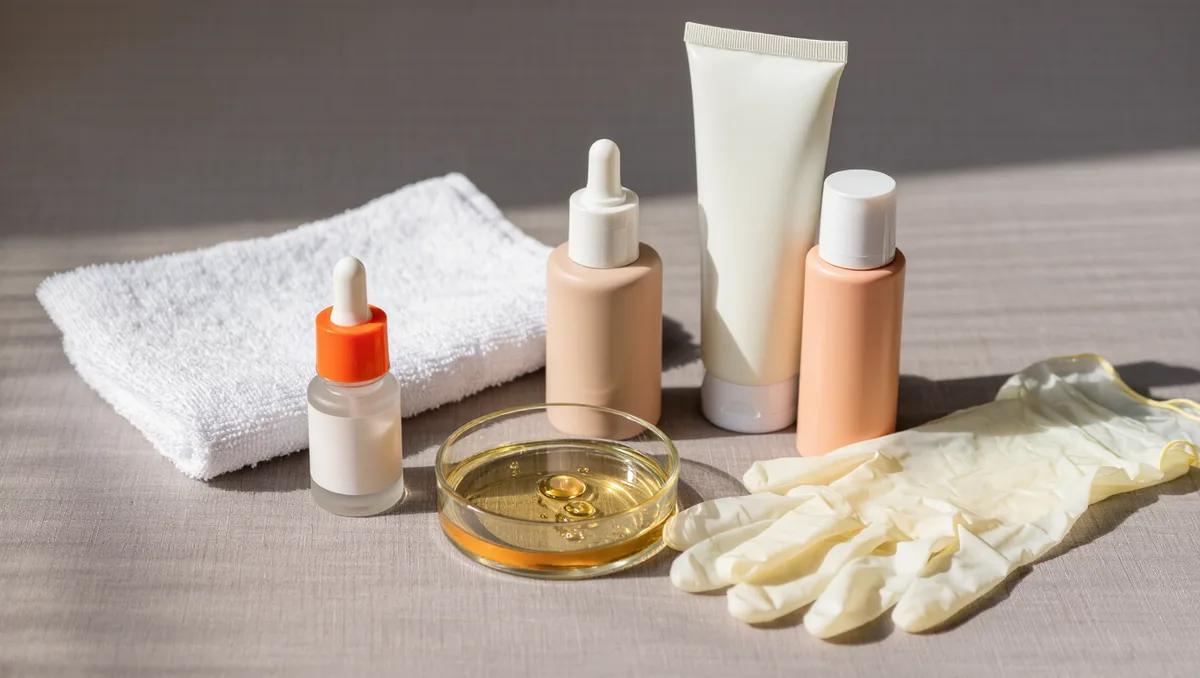
Yes, and this is one place where money buys function. Retinol and retinaldehyde degrade when exposed to light and oxygen. Opaque, airless pumps preserve the molecule better than clear dropper bottles, whatever the price tier. A $12 serum in an airless tube can be better protected than a $70 serum in a clear glass bottle. If you buy a dropper format, store it in a dark cabinet and finish it within a few months of opening, since degradation continues after the first use.
How do you compare two retinol products fairly?
- Identify the retinoid form first. Retinol, retinal, adapalene, or an ester. Strength comparisons are only valid within the same form.
- Check the percentage if disclosed. Percentages are not required on cosmetics labels, so "retinol complex" with no number tells you little.
- Look at the packaging. Airless and opaque wins, at any price.
- Price per gram, not per bottle. A 30 ml bottle at $60 and a 15 ml bottle at $40 are different deals; serums range widely in size.
- Factor in how fast you will use it. The strongest product you cannot tolerate delivers zero value; tolerability is part of the math.
Is prescription tretinoin cheaper than OTC retinol?
Often, yes, per tube. Generic tretinoin cream has commonly cost in the tens of dollars per tube with pharmacy discount pricing as of 2024–2025, though it requires a prescription and a doctor's visit that may add cost. Dermatologists sometimes point out the irony that patients pay prestige prices for esters when the actual active form is available generically. That is a decision for you and a clinician, not this article — but the arithmetic is worth knowing before you assume the pharmacy is the expensive option.
Bottom line
Price and retinol strength are two different axes that marketing keeps gluing together. The form of vitamin A sets the ceiling of activity, conversion steps determine how much of it arrives, packaging determines whether it survives the shelf, and the price mostly reflects everything else. Choose by form and tolerability first, then let price be the tiebreaker instead of the deciding vote.