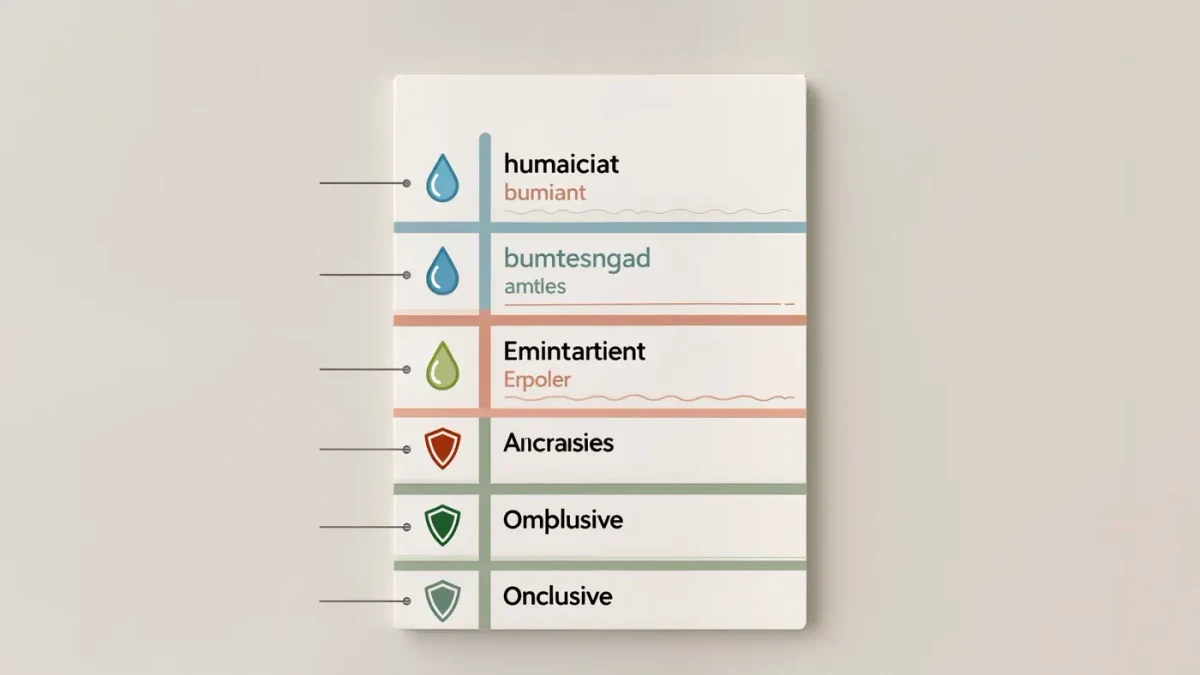
A $120 "clinical" moisturizer and a $12 drugstore one frequently share the same first five ingredients — water, glycerin, a silicon or occlusive, a fatty alcohol, a humectant — because all moisturizers are built on the same formulating logic: humectants pull in water, emollients smooth, occlusives seal. The price difference usually sits further down the INCI list, in the actives, the elegance of the texture system, and the brand's overhead. Reading the ingredient list in order turns the clinical vs drugstore moisturizer comparison from a vibe check into an audit, and the audit often shows the drugstore formula is 90 percent of the product.
What does the INCI list actually tell you?
INCI — the International Nomenclature of Cosmetic Ingredients — is the standardized ingredient naming system US regulation requires on every cosmetic package. Two rules make it readable:
- Order tracks concentration, roughly: ingredients above one percent are listed in descending order of content; below one percent, the brand may list them in any order.
- Names are standardized, so glycerin is glycerin whether the tube costs $6 or $90. A brand cannot rename a cheap ingredient into a luxury one — it can only hide it in proprietary blends.
That second rule is the shopper's best friend and the marketer's enemy. When a cream's story is a trademarked "complex," the INCI list still shows you the actual ingredients — and often shows that the complex is a common extract blend with a registered name.
What are the workhorse ingredients on both shelves?
Moisturizer formulators, whether at a lab brand or a mass brand, draw from the same catalog, documented in cosmetic chemistry references and dermatology reviews of moisturizer science:
- Humectants: glycerin — arguably the single most proven humectant in skin care — plus hyaluronic acid, panthenol, urea.
- Emollients: fatty alcohols like cetyl and stearyl, squalane, caprylic/capric triglyceride.
- Occlusives: petrolatum — which dermatologists regard as a gold-standard barrier ingredient — dimethicone, shea butter.
- Barrier-supporting actives: ceramides, niacinamide, cholesterol in barrier-repair ratios.
Check a drugstore favorite and a prestige cream with this list and you will usually find both contain several of the same workhorses in the top ten. Dermatology reviews of moisturizer efficacy repeatedly note that inexpensive formulas with ceramides and hyaluronic acid perform comparably to prestige products in barrier-repair attributes, which is why dermatologists so often recommend drugstore moisturizers by name.
Where does the clinical premium genuinely go?
Honest answer: three places, sometimes worth paying for.
- Elegance and sensory system. The same actives can sit in a greasy base or a weightless one; texture engineering costs money in R&D and premium emulsifiers. If a pleasant texture changes how often you use the product, that is a real benefit — the compliance argument again.
- Higher-dosed or better-delivered actives. A prescription-adjacent ingredient at meaningful concentration costs more than a dusting. Read for whether the active sits in the top third of the list or behind the preservative — the position approximates its dose.
- Clinical testing programs. Brands that run dermatologist-supervised studies publish claims behind them. The testing is expensive, and to the extent it de-risks your purchase, it has value. Treat unpublished "clinically proven" phrases skeptically — the phrase is unregulated in the sense that no agency certifies the wording, so ask what study, how many subjects, and measured what.
How do you compare two moisturizers at the shelf?
- Match the job first. Dry skin needs occlusives; oily skin wants lighter emollients; compromised barriers want ceramides and minimal fragrance. Category before brand.
- Read the first five ingredients and check for the workhorse list above. If they match a cheaper product's opening five, the core function is matched too.
- Locate the hero active. Top third of the list: plausibly dosed. Last: marketing sprinkle.
- Flag fragrance and known irritants if your skin is reactive; drugstore and clinical products both use them.
- Run price per ounce, the same unit math as every other aisle — clinical jars are frequently small and their per-ounce price can be ten times the drugstore tube's.
When is the clinical product worth it?
- You have found a texture you will use daily. The best-formulated cheap cream you avoid loses to the expensive one you apply.
- A specific active at a specific dose matters to your skin and the clinical version documents it.
- You are managing a diagnosed condition under dermatologist guidance, in which case the clinician's recommendation overrides this whole exercise.
When is drugstore the full answer?
For basic barrier maintenance — the job most moisturizers do most of the time — a $12–$20 formula with glycerin, ceramides, and petrolatum covers the physiology. Dermatologists' own public recommendations of drugstore moisturizers, echoed in clinical skincare reviews, exist precisely because the workhorse ingredients are cheap and the expensive ones are mostly texture and story. Spend the difference on actives that do have documented dose-response — or on the second tube.
One more shelf trick: jar packaging cuts both ways. Clinical actives in open jars degrade faster with every opening, while airtight pumps and tubes protect ingredients at any price tier. If the premium product you are eyeing comes in a wide-mouth jar and its hero active is a fragile one, part of what you are paying for evaporates before the last scoop. Format is an ingredient decision, not a styling one.
Bottom line
The INCI list is the only part of the package that regulation requires to tell the truth. Read it in order, match the workhorses to your skin's job, locate the hero active's position, and price per ounce. The clinical premium buys elegance, dosed actives, and documented testing — pay for those when your skin needs them, and keep the drugstore tube as the default it has earned.