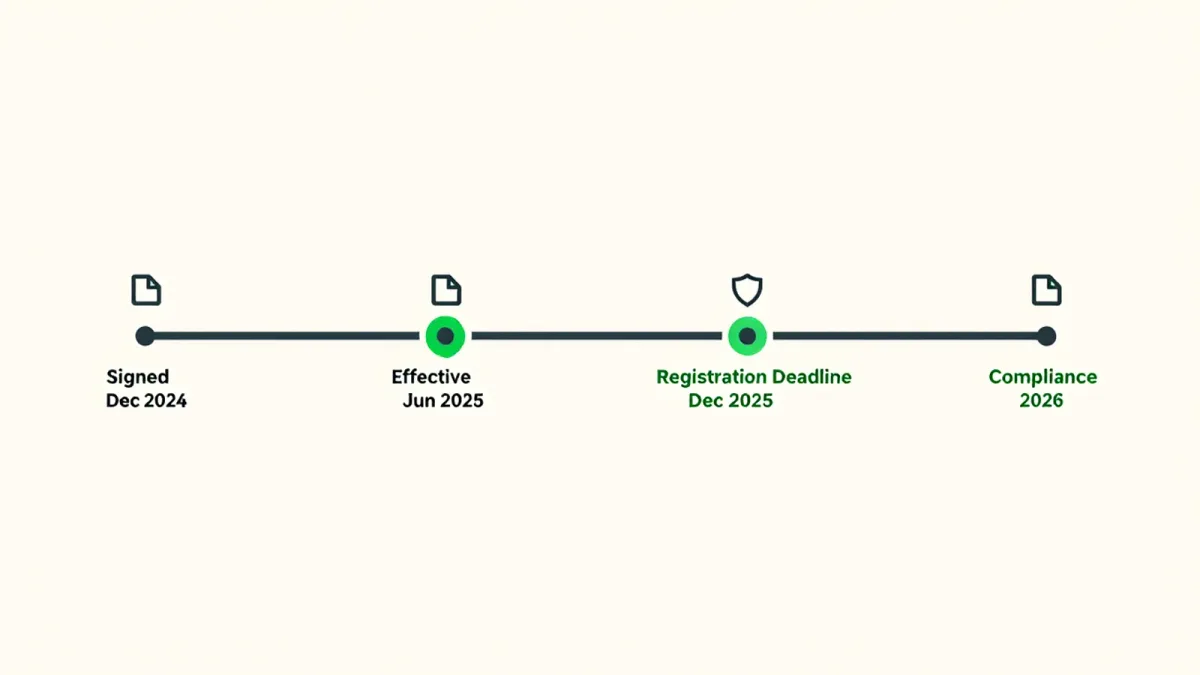
New York lawmakers closed their most recent legislative session in June 2026 without taking up the Fashion Act, according to legal trackers including Katten and Hunton, which report that fashion accountability bills largely stalled across the four states considering them this year — though the New York bill, S4558A, remains alive because bills carry over in the two-year session. For shoppers, the practical result is unchanged: sustainability claims on clothing tags are still voluntary assertions, not verified standards.
What would the Fashion Act actually change for shoppers?
The bill targets companies with more than 100 million dollars in revenue selling fashion in New York. If passed, it would require them to map their supply chains, disclose greenhouse-gas emissions with science-based reduction targets, and carry out environmental and human-rights due diligence — with penalties funding a remediation fund. The shopping-relevant piece is the anti-greenwashing provision: brands making claims like 'carbon neutral' or 'responsibly made' would need to back them with substantiated data, and false claims could carry legal consequences. Now, those same claims are policed mainly by consumer-protection lawsuits, which move slowly and case by case.
Why does a state bill matter to prices?
Compliance costs eventually reach price tags, which is why the bill draws industry opposition from groups like the American Apparel and Footwear Association. But the price effect cuts both ways. Verified claims and standardized due diligence could reduce the 'green premium' shoppers currently pay on trust alone — you would pay less for unverified labels because the verification floor would apply to everyone. In the meantime, that premium stays a judgment call.
How should you read sustainability claims until then?
- Prefer specific, checkable claims — named factories, published supplier lists, certified fiber standards — over vague words like 'eco' or 'conscious'.
- Treat certifications from independent bodies as stronger than brand-created labels.
- Remember that durability is the most verifiable sustainability claim of all: cost per wear improves whether or not a brand's climate math checks out.
The current status in one line: the Fashion Act stalled without an Assembly vote when New York's session ended in June 2026, and it may return — but until it passes, every green claim on a tag is a brand's own word, so buy on specifics rather than adjectives.