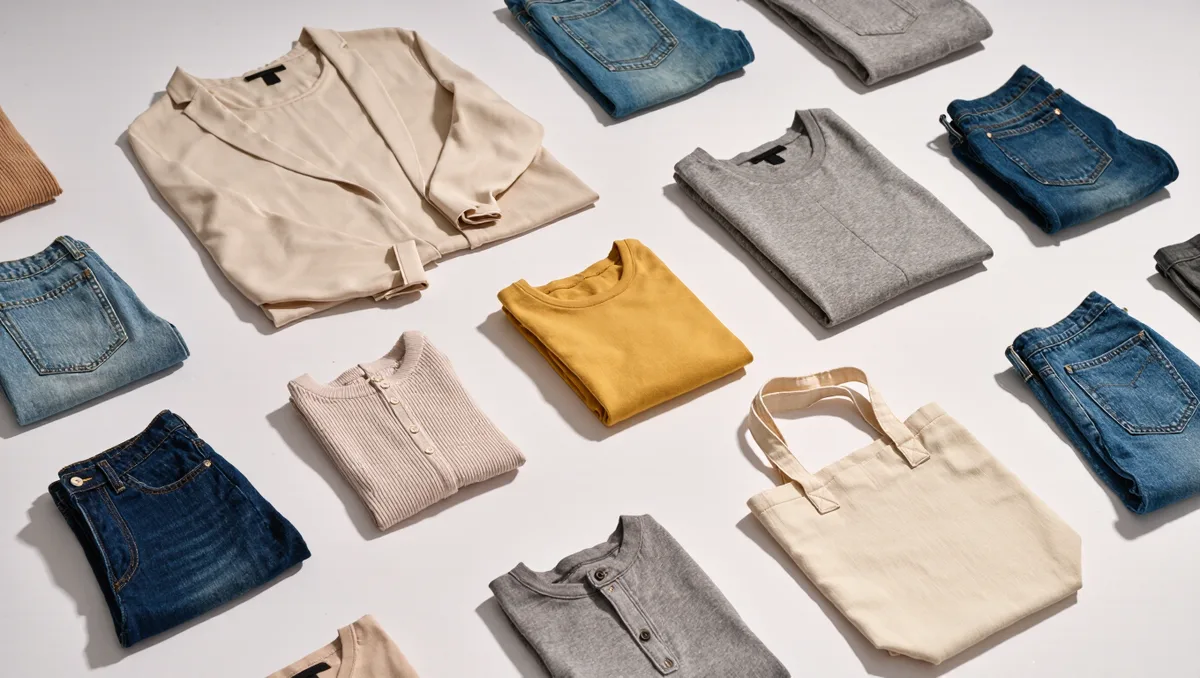
When you buy something at an outlet store, you are often not buying last season's retail stock at a discount. You are frequently buying a garment made specifically for the outlet channel: a separate product line, produced to a different spec, priced to look like a markdown. The tag may say it was "originally" far more. In many cases, that original price never existed in a regular store.
This is not a scam in the legal sense. It is a pricing structure, and it works because the setting does a lot of the persuading. A rack full of a familiar brand at what looks like half off reads as a windfall. Whether it actually is one depends on what the item is, how it was made, and what it honestly cost elsewhere.
Knowing the difference changes how you shop. Some outlet goods are genuine bargains on quality-per-dollar. Some are thinner versions of things you'd be better off buying at full price once. Here is how to tell which is which, and how to check whether a discount is real before you carry anything to the register.
What exactly is outlet stock?
Outlet stores exist to move product through a second channel. Historically, that channel held true leftovers: last season's overruns, factory seconds with small flaws, and returns that couldn't be sold as first quality. That still happens. But over the past few decades, the volume of outlet shopping grew large enough that many brands began manufacturing goods expressly for it.
These made-for-outlet lines are designed in parallel with the main line, not drawn from it. They typically use simpler construction, lighter or blended fabrics, and fewer of the details that raise production cost. The branding looks nearly identical, which is the point. The garment fills a wardrobe slot at a glance, but it is a different object with a different cost base.
There is nothing wrong with a simpler garment if the price matches the simpler garment. The problem is presentation: the outlet price is often framed against the retail line's price, which the outlet item never carried. That framing is what you're evaluating, not the tag itself.
How can you tell made-for-outlet goods from retail stock?
You can't always, but there are reliable tells. Check the label first. Many brands use a distinct product code, a slightly different logo treatment, or an added marker on made-for-outlet items. A tag that reads differently from the version you know from the regular store is a clue worth trusting.
Then handle the garment. Compare the fabric weight to the same category in a regular store. Look at the stitching density at the seams, the hardware on a bag, the lining inside a jacket. Made-for-outlet pieces tend to be lighter, with fewer interior finishes. None of this makes them bad. It makes them cheaper to make, and the price should say so.
Finally, ask a simple question: was this ever sold at full price anywhere? If the style is unfamiliar and the "was" price is suspiciously round and high, you are likely looking at an outlet-line item framed against a price it never had. That doesn't mean you should walk away. It means the real comparison is against similar-quality goods anywhere else.
Is the discount actually real?
Sometimes it is, and the honest way to know is to compare against documented prices, not against the tag's "was" figure. For a genuine clearance channel, the comparison is easy: the item really did sell at the full price, and the outlet discount is measured against a real history. For made-for-outlet lines, the comparison has to be against comparable items elsewhere, because there is no prior price to discount from.
Online luxury outlets show how the model works at its most transparent. THE OUTNET, which sells prior-season designer inventory, advertises fashion at up to 70% off, with current category edits running at figures like up to 75% off knitwear or up to 65% off selected designer ranges. Those discounts are measured against the items' original retail-season prices, and the site's model is built on that history. A physical outlet mall rarely offers you that same paper trail at the rack.
Our analysis: the discount question is really a quality-per-dollar question. A made-for-outlet cotton tee at a solid price can beat the retail version on value, because you're paying for the simpler garment you're actually getting. The deal fails when the outlet price sits close to what a better-made retail alternative costs on sale. That gap, not the percentage on the tag, is the number worth checking.
What about returns, quality claims, and the fine print?
Outlet return policies are often narrower than regular-store policies, and some outlet locations sell final-sale goods. Check the policy before you pay, not after. If you shop outlets online instead, the rules differ again; our guide to how online returns actually work covers what the law requires there. For in-store windows across retailers, see how long you actually have to return something, by retailer.
Quality claims deserve the same skepticism as price claims. An outlet garment's durability is not established by the brand name on the label, because the construction may differ from the line that earned the reputation. No supplied evidence in this piece measured how any specific outlet line wears over time, so treat longevity as unverified until you inspect the garment yourself. Fabric, stitching, and hardware tell you more than the logo does.
One more piece of context: apparel prices have been climbing broadly, which makes every discount look better by contrast. Coverage of the latest government data, including clothing prices climbing in the April CPI report, shows the baseline shifting upward. A discount measured against a rising baseline can feel larger than it is. That is a reason to check absolute prices, not just percentages. For related coverage, see Clothing prices climbed again in April, latest CPI report shows. For related coverage, see Clothing prices climbed again in April, latest CPI report shows.
Who should skip the outlet mall?
Skip it if you are shopping for a specific item you've already researched at regular retail. If you know the exact style, the outlet version will probably not be it, and the near-identical look-alike may disappoint you on the details you cared about. Buy the real one on sale instead, or wait.
Skip it if you are buying for longevity above all. If your wardrobe rule is fewer, better pieces, made-for-outlet construction usually works against that rule. The exception is basics you replace often anyway, where simpler construction costs you little.
Stay if you have time, no fixed shopping list, and a tolerance for sorting. Outlet shopping rewards browsing: you inspect labels, compare fabric weights, and price-check on your phone. Walk in knowing the channel's structure and the outlet can be a legitimate source of value. Walk in trusting the "was" tags and it mostly sells you a feeling.
What this means for your next outlet trip
The evidence points one way: an outlet store is a separate retail channel with its own product lines, not a warehouse of discounted retail stock. The goods can be worth buying, but only when you judge them on what they are rather than what the tag claims they once were. Read labels, weigh fabric, check return rules, and compare against real alternatives.
What remains unknown is per-brand detail. Each company structures its outlet channel differently, and the tells above are patterns, not guarantees. The reliable habit is the same everywhere: treat every outlet price as a claim to be verified against something you can actually see, in the garment or in a documented price history.