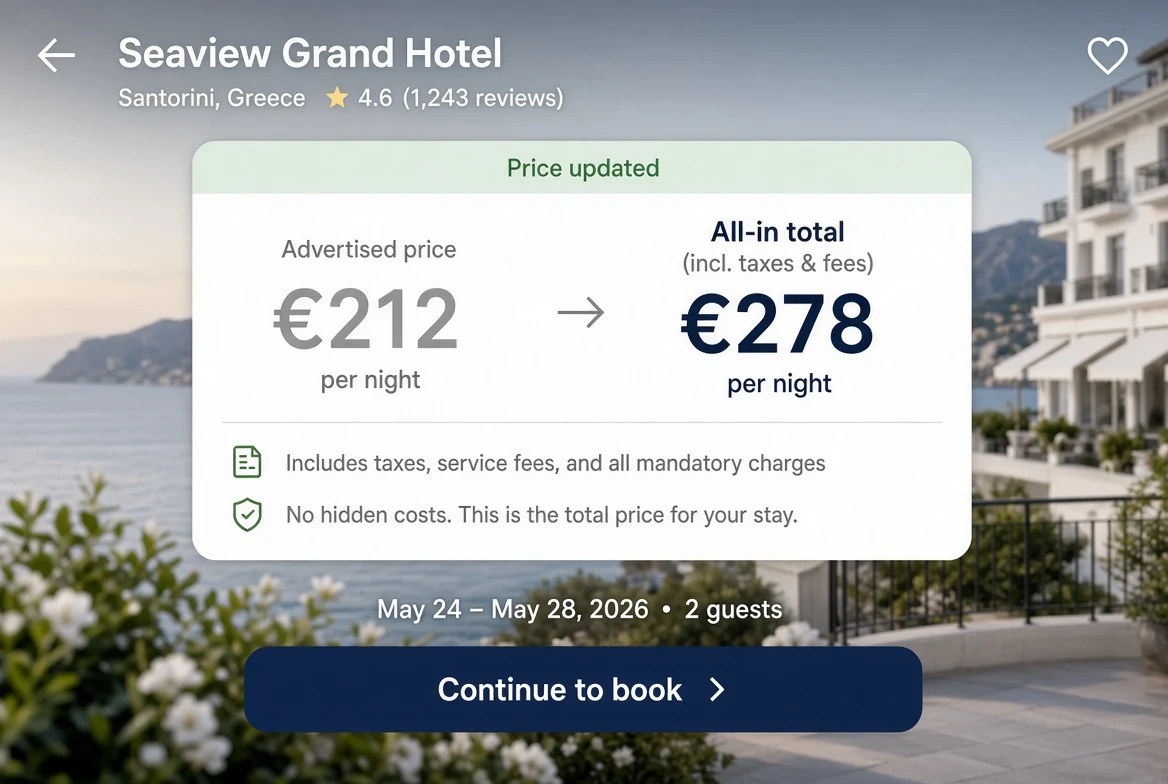
In April 2026, the Federal Trade Commission and the Maryland Attorney General announced a settlement with Lindsay Automotive Group, the owner of two Maryland dealerships, over deceptive pricing: ads built around low car prices that most buyers could not actually get, plus mandatory fees and add-ons stacked on during the purchase. Consumers charged more than $75 million between April 1, 2020 and December 31, 2025 may be eligible for redress, and the dealerships must pay $3.1 million in penalties to Maryland. If you have ever watched a car's price grow in the finance office, this case is your playbook for spotting it next time.
How does an advertised price become $75 million in extra charges?
The mechanics were ordinary by industry standards, which is the point. The dealerships advertised vehicles at attractive prices, then added mandatory charges — documentation fees, prep charges, add-on products like protection packages — that the advertised buyer would be required to accept. The FTC's complaint also targeted advertised prices tied to conditions most customers could not meet, such as specific trade-in or financing requirements disclosed in fine print. Individually, each add-on looked small. Multiplied across five years of transactions, the gap between the advertised price and the paid price crossed $75 million.
Which fees at a dealership are negotiable?
More than the paperwork suggests. Dealer-attached products — paint protection, fabric coatings, nitrogen-filled tires, extended service contracts priced above the manufacturer's plan — are margins, not requirements, and every one of them can be declined or repriced. Manufacturer-set charges like destination fees are fixed. Documentation fees vary by state, and several states cap them. The line to hold: if a fee exists to raise the transaction price rather than to cover a real state-mandated cost, it is part of the negotiation, whatever the desk calls it.
How do you buy a car without the fee stack?
Do the arithmetic in writing before you visit. Ask for the out-the-door price by email on a specific vehicle identification number, and refuse to discuss monthly payments at all — payment framing is where add-ons hide, because a $2,000 protection package adds about $33 a month and feels invisible. Bring your own preapproved financing so the dealer's rate markup has nothing to attach to. And before signing, compare the contract line by line against the email quote; anything new gets removed or the deal ends. The settlement described here is exactly what that last five minutes of comparison is for.
What the settlement changes — and what it does not
For affected buyers, redress means refunds of the unlawful charges, with Maryland administering the program. For the market, one chain's settlement does not change industry pricing, but it does document the enforcement theory: advertising a price you do not honor is deceptive even when the final contract was signed willingly. That record matters for the next dispute you have over a price that grew between the ad and the desk.
prices and policies change; check the retailer's current terms.