The discount at an outlet store is real, but the comparison behind it often is not: industry reporting and the brands' own practice since the early 2000s show that a large share of outlet merchandise is manufactured specifically for outlet channels, sold at lower price points and lower build standards than the full-price retail line under the same logo. That "60 percent off" jacket is frequently 60 percent off a price nobody ever paid for that particular jacket. The outlet model described here reflects documented US retail practice as of March 2026; merchandise mixes and prices are subject to change after the date shown.
How did made-for-outlet lines become the norm?
Outlets began honestly. In the 1930s, factory stores sold seconds and surplus from the mill floor. That model worked while supply exceeded retail demand. By the 1990s and 2000s, brands had the opposite problem: full-price retail sold through most of what the factories made, but outlet villages had become a profitable channel with hungry landlords and shoppers expecting deep discounts. The industry's documented solution was to keep the channel and change the goods — brands commissioned separate production runs, at lower material and construction specs, sold only through outlets and labeled or coded so the mix could be tracked. Major US brands across apparel, handbags, activewear and home goods now run these outlet-specific lines, and analysts and journalists have repeatedly documented that at many outlet locations the made-for-outlet share of stock is the majority, not the exception.
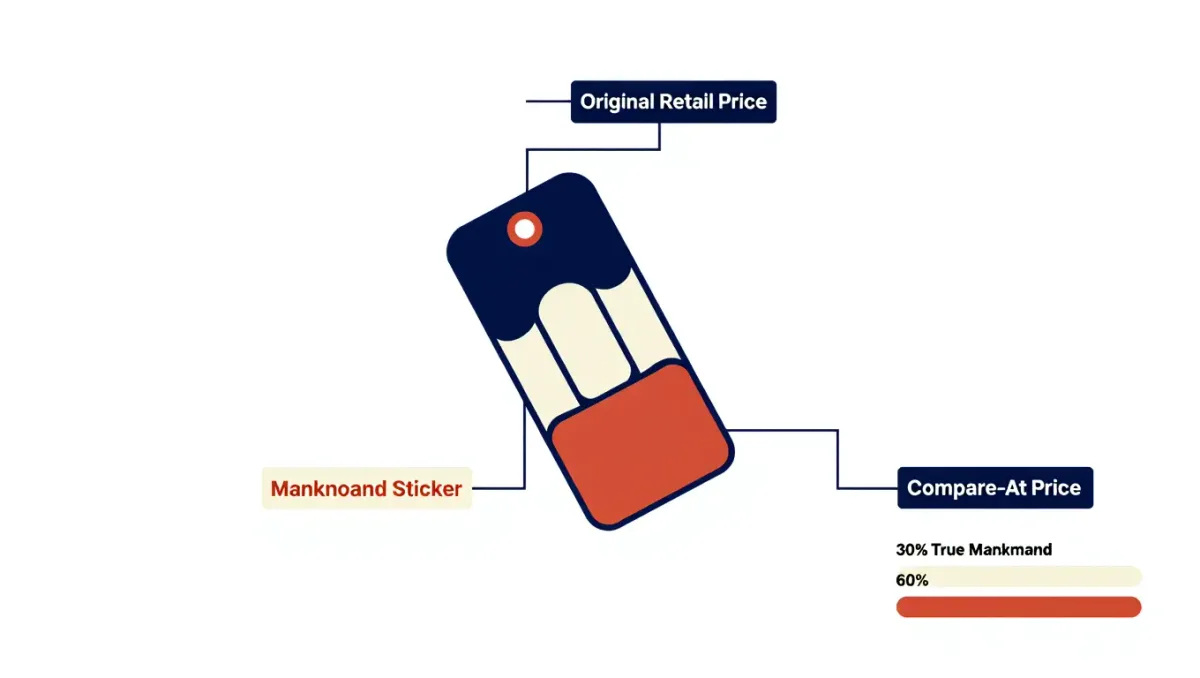
This is legal and, for the most part, disclosed — in tags, SKU codes and style numbers that differ from the retail line. The brand is not lying about anything except the comparison your brain performs automatically: "this brand's coat costs $300 at the mall, so $110 here is a bargain." The $110 coat is not the mall coat.
How the math works when two products share one logo
An illustrative example, using ranges consistent with documented reporting on outlet pricing practices:
| Retail-line jacket | Outlet-line jacket | |
|---|---|---|
| List price at full-price channel | $300 | never sold there |
| Outlet price | $150–180 (true clearance) | $110–130 (the "discount") |
| Construction | Higher-grade fabric, more stitching, branded hardware | Lighter fabric, simpler seams, generic hardware |
| Actual discount | 40–50% off a real price | Varies; the anchor price is hypothetical |
The outlet jacket can still be a fine purchase at $110. The problem is only the story: it is not a $300 jacket at 60 percent off. It is a $110 jacket that arrived next to a sign about 60 percent.
How to tell which one you are holding
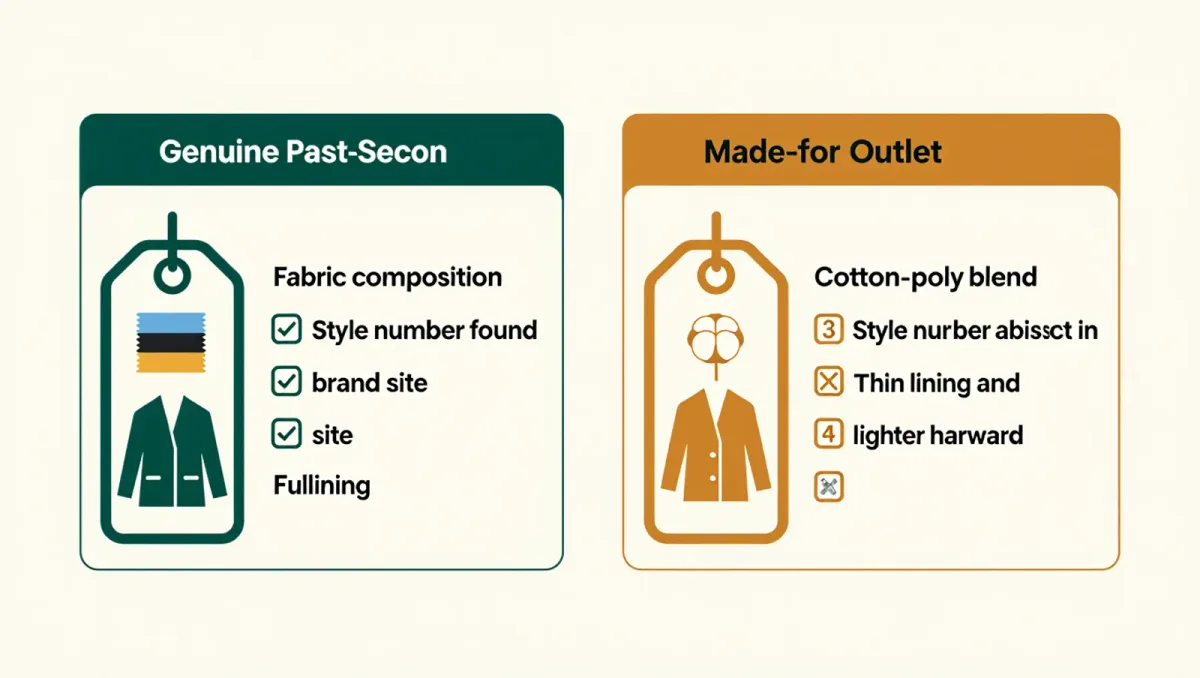
You can identify made-for-outlet goods in about thirty seconds with three checks:
- Read the style or SKU number. Many brands use distinct codes for outlet production — for example, style numbers beginning with a different prefix than the retail line's. Store associates are generally allowed to tell you whether an item was made for the outlet if you ask directly.
- Feel the difference next to memory. Outlet versions of the same brand typically run lighter: thinner denim, lower-grade leather, fewer interior pockets, printed rather than stitched labels, single stitching where the retail version has double.
- Check the tag language. Phrases like "made exclusively for [brand] outlets" or an "exclusively for" label identify outlet-channel goods. True clearance carries the same tag as the full-price line, sometimes with a small mark or hole punch through the label.
Is the outlet ever actually the better buy?
Yes, in three specific situations. First, basics: a cotton t-shirt or a simple hoodie from an outlet line at $15 can beat the retail equivalent on pure price with an acceptable quality gap, because there is little engineering to cheapen. Second, trend pieces you expect to keep one or two seasons — durability stops mattering when the wear horizon is short. Third, genuine end-of-season clearance of the retail line, which does reach outlets and off-price channels; those pieces carry retail construction at outlet prices and are the best value in the building. The purchase that rarely makes sense is the outlet version of a signature product — the flagship bag, the heritage coat — because those are exactly the items where the construction gap between lines is widest.
Who should skip outlets altogether
Skip the outlet trip if you are shopping to a comparison in your head — "I want brand X quality for half price" — because the channel is built to serve that fantasy with different goods. Skip it also if you need lifetime-durability items and cannot inspect construction yourself; buy the retail line on sale instead, where the 30 to 40 percent off full-price events is a smaller discount but an honest one. And skip it if the drive is long: outlet villages are placed far from cities deliberately, and a 90-minute round trip is a cost no t-shirt discount covers.
An outlet is not a museum of the mall's leftovers. It is a second brand wearing the first brand's name.
None of this requires boycotting outlets. It requires reading tags like a buyer rather than like a fan of the logo, and pricing what you are holding on its own merits — not on the number of a jacket that was never for sale.