Before you buy an item at retail, check what it sells for secondhand - not what sellers ask, but what it actually sells for. That single check changes three outcomes: it catches items available cheaper pre-owned, it reveals which products hold value well enough to buy new without guilt, and it warns you off pieces whose resale collapse signals a fad. A $220 sneaker with a steady $150 sold-history is a $70 decision you can make in ten minutes; the same sneaker with thin, volatile listings is a full-price gamble on your taste.
The habit costs little because the tools are free. eBay shows sold listings (filter or URL parameter, depending on the platform's current interface), Poshmark, Depop, Mercari, Vestiaire Collective, The RealReal, and Grailed cover apparel and accessories at different price tiers, Facebook Marketplace covers local pickup. The skill is not browsing those apps - it is reading the data they expose for liquidity, condition, and real transaction prices.
What is liquidity, and why does it matter more than price?
Liquidity is how fast an item sells: how many sold listings appear per month, how quickly new listings move, and whether the price band is tight or scattered. High liquidity means you can exit later - reselling a highly liquid item in good condition is a chore measured in days; reselling an illiquid one is a chore measured in seasons, or never. For value purposes, liquidity is what makes the resale check a prediction tool rather than trivia: an item that sells in a week at a predictable price has a real "return ticket," and its effective cost is purchase price minus realistic resale. An item with three stale listings and no sales has none, whatever the brand.
How do you read sold prices correctly?
Ignore asking prices entirely - they are hopes. Filter to sold or completed listings over the past 90 days, then look at the cluster, not the outliers: a sneaker with most sales between $140 and $160 has a $150-ish market, and the one $210 sale was probably a rare size or a bidding war. Note the condition of sold comparables - listings for "new with tags" items set the ceiling; worn-but-good condition sets the number relevant to a used purchase. For used-buying decisions, subtract cleaning, minor repairs, and your time from the apparent discount. A pre-owned $220 jacket at $90 is not automatically a deal if it needs a $40 relining and has no returns option.
When does resale data say "buy new"?
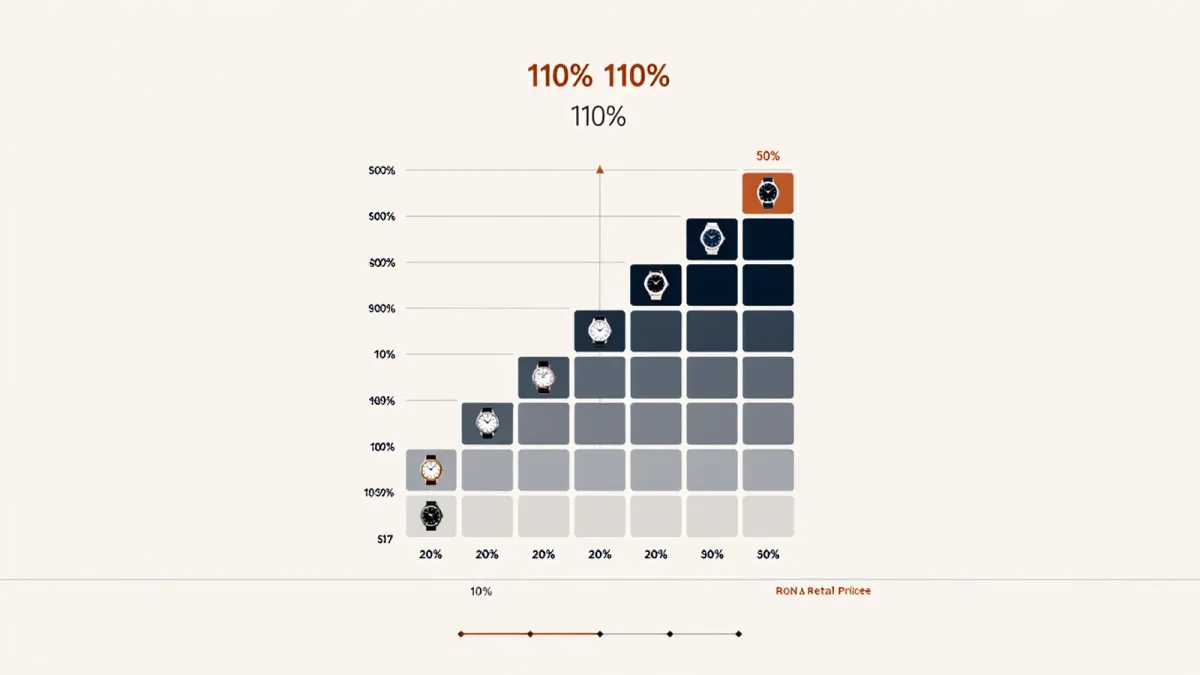
Counterintuitively, strong resale markets often argue for buying new. If an item's used price sits at 80 to 90 percent of retail - common with certain in-demand sneakers, outerwear, and handbags - the used market is not offering much of a discount, and buying new gets you the warranty, the return window, and unambiguous condition for the margin. The resale check's second use is exactly this: it converts "should I buy used?" from ideology into arithmetic. Below roughly 60 percent of retail for a liquid item in good condition, used usually wins decisively. In between, condition risk, sizing risk, and the return window decide it.
| Used price vs retail (liquid item) | Read | Practical call |
|---|---|---|
| Under 50% | Deep discount, possibly condition or sizing risk | Used, if condition checks out |
| 50–70% | Healthy secondhand market | Used usually wins for patient buyers |
| 70–90% | Value holds; little discount | Buy new for warranty and returns |
| Over 100% | Resale premium (hype or scarcity) | Skip unless you truly want the item |
Bands are illustrative rules of thumb based on common resale patterns, not market data for any specific product; they shift with trend cycles.
What are the traps in buying resale?
- Sizing without a return path. Most peer-to-peer platforms allow no returns for fit; check the platform's current policy before relying on a rescue.
- Condition laundering. "Gently used" covers a range; demand photos of flaws, soles, and interior labels, and read feedback history.
- Counterfeits. Concentrated on high-demand logos; prefer platforms with authentication programs for categories where fakes are common.
- Deadstock inflation. "New with tags" vintage pricing reflects scarcity, not value for wearing - you are paying a collector's premium to own, not to use.
Secondhand apparel has been one of retail's faster-growing segments in recent years (Reuters reporting on resale platforms, 2023–2025), which means more selection and better tools - and more noise to read through. Prices and platform policies are subject to change.
The bottom line
Make the resale check a standing step between "I want this" and "I'm buying this." Ten minutes of sold-listing reading tells you the item's real market price, its exit liquidity, and whether new is actually the cheaper net cost. It will not talk you out of things you love; it just stops you from paying retail theater prices for them.
How does the resale check work for categories beyond fashion?
The same ten minutes apply well past sneakers and handbags. Tools, bikes, strollers, audio gear, camera bodies, and furniture all have active secondhand markets with visible sold histories, and the value patterns differ in useful ways. Hard goods tend to depreciate on condition and age rather than trend cycles, which makes their resale data more stable and the exit price more predictable — a mid-range drill or road bike has a knowable market floor. Furniture is the opposite: heavy, low-liquidity, and heavily discounted used, which argues for buying basic new pieces cheap rather than paying retail for mid-tier ones you could find secondhand at half price. The check also works as a guilt audit in reverse: if an item you are considering has almost no resale market at all — fast furniture, fast fashion, seasonal gadgets — that silence is the market telling you the item will be worth zero and given away. Sometimes that is acceptable for a $15 t-shirt; at $400 it should change the decision. Whatever the category, the procedure is identical: find the item's sold listings, note the 90-day price band and how many sold, match condition, and let the band — not the brand — set what you are willing to pay at retail.