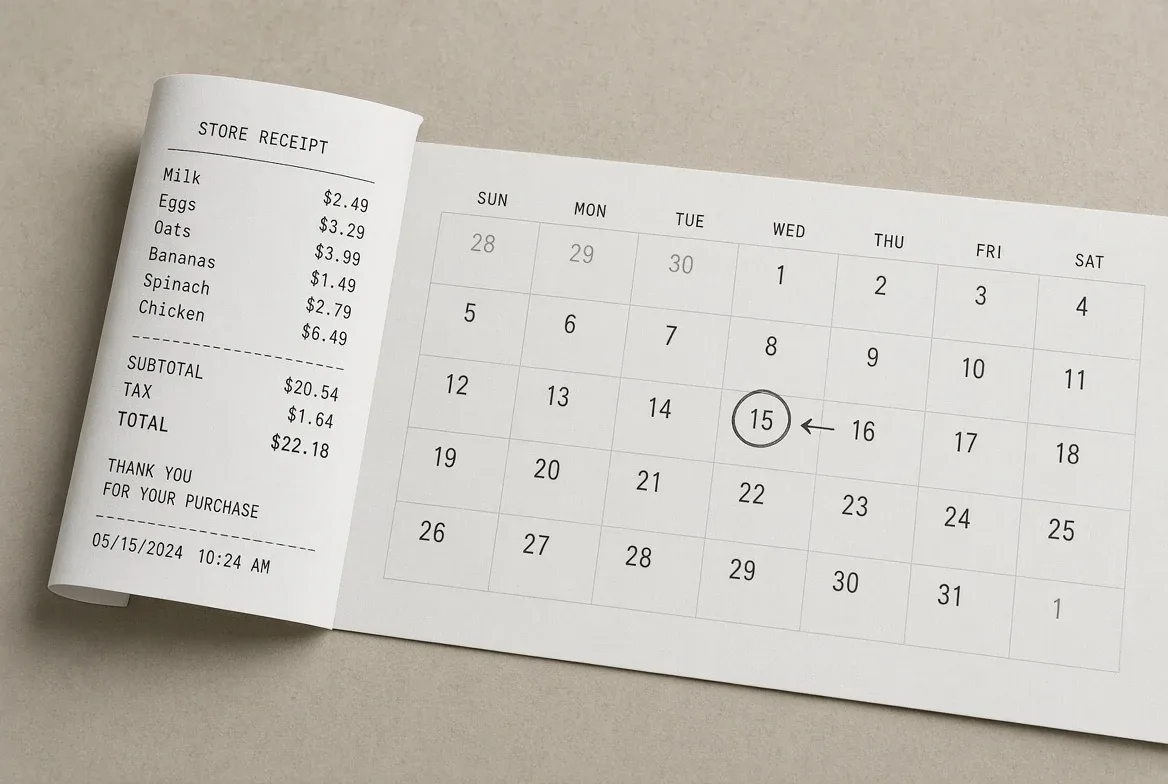
No U.S. law requires a store to accept a return at all — refund and exchange rights come entirely from the retailer's own posted policy, not from federal statute. In practice the big chains still compete on generosity: Target gives 90 days on most items it sells directly, Macy's gives 30, and Nordstrom states no fixed time limit. The catch is that each of those numbers comes with exceptions that shrink the window fast, so the posted headline figure is a starting point, not a guarantee.
The Federal Trade Commission's consumer guidance is blunt about where the rules actually live: it tells shoppers to "look for return policies, deadlines, customer service numbers and other important information on receipts, product packaging, warranties, or the seller's website" and notes that "many stores will not take returns or exchanges after a certain time, like 30 or 90 days" (Federal Trade Commission, Consumer Advice, as of August 20, 2026). The agency's advice is about resolving problems with a business, not about a legal right to a refund — because that right doesn't exist as a blanket federal rule.
Is a store legally required to take something back?
No. The FTC's own consumer guidance treats return policies as a matter of store discretion, not law, and directs shoppers to check the retailer's posted terms rather than assume any minimum window applies (Federal Trade Commission, as of August 20, 2026). A handful of states set narrow disclosure rules — mainly requiring a store to post its policy if one exists — but none of the three national retailers checked for this guide operate under a policy shaped by a nationwide return mandate. What you're owed is whatever the store wrote down.
How long do the big three actually give you?
The posted windows vary more than shoppers usually assume, and the fine print does most of the work. Below is what each retailer's own policy page states as of publication.
| Retailer | Standard window | Notable catch |
|---|---|---|
| Target | 90 days on unopened items sold directly by Target; 30 days on Target Plus Partner items | Some items carry a modified policy printed on the receipt or listing, and fraud-flagged returns can be denied outright |
| Macy's | 30 days from delivery or purchase | Last Act clearance, gift cards, and personalized or altered items are final sale; several designer lines (Burberry, Louis Vuitton) run shorter or separate rules |
| Nordstrom | No stated time limit; handled case by case | Fine jewelry can't go back by mail, special-occasion and designer pieces should keep tags attached, and Balsam Hill items are capped at 30 days or December 25 |
Target's own help page puts it plainly: "Most unopened items sold by Target in new condition and returned within 90 days will receive a refund or exchange" (Target, as of August 20, 2026). Macy's states that "most items can be returned within 30 days of delivery or purchase" (Macy's, as of August 20, 2026). Nordstrom's policy page goes the other direction, stating there are "no time limits for returns or exchanges" while reserving case-by-case judgment (Nordstrom, as of August 20, 2026).
What almost always shortens the window?
Category exceptions do more damage to a return window than the calendar does. Final-sale tags, clearance racks, and designer collaborations routinely opt out of the standard policy even inside a store that otherwise offers a generous window. Macy's names Last Act merchandise, food and gourmet gifts, gift cards, and altered or personalized items as non-returnable outright, and shortens the clock further on brands like Burberry and Longchamp at specific locations. Nordstrom carves out fine jewelry, pre-owned Watchfinder & Co. pieces, and car seats that must ship back in original, unopened packaging. Target flags fraud or suspected fraud, opened or damaged items, and receiptless purchases as grounds to deny a return rather than automatically honor the 90-day window.
The pattern holds across all three: the broad headline number applies to ordinary, unopened, full-price merchandise. Anything marked down to clearance, personalized, or from a licensed in-store partner is playing by a different, shorter rulebook — one usually printed on the receipt itself.
What happens if you don't have a receipt?
Losing the receipt doesn't automatically kill a return, but it usually changes the payout. Nordstrom's policy states that without a sales record, staff will still process a return with valid identification, but the refund lands on a Nordstrom gift card at the item's current price rather than back on the original payment method (Nordstrom, as of August 20, 2026). Target's policy similarly lists a missing receipt among the reasons a return can be limited or denied at the retailer's discretion. Treat the receipt, or the retailer's app record of the purchase, as the thing that actually protects the return — not the sticker on the box.
How to check a store's real policy before you buy
- Find the specific product page or receipt line — many retailers print a modified return window directly there, overriding the general store policy.
- Check whether the item falls into a flagged category: clearance, final sale, personalized, or a licensed third-party brand sold in-store.
- Note the countdown trigger — some policies start the clock at purchase, others at delivery, which matters most for anything shipped.
- Save the receipt or order confirmation; a missing record can shift a refund from cash back to store credit at several retailers.
- Re-check the policy page close to the purchase date — retailers update return terms without much notice, and a policy checked months ago may no longer match.
None of this requires trusting a countdown clock or a "limited time" banner. The return window is simply contract language the store wrote and can rewrite, and the only reliable way to know it is to read the specific policy attached to what's actually in the cart.
For a related shopping news perspective, read Hypno Challenge: Reality TV’s Most Unique Transformation Show is Almost Here!.
For more context, read Joann's second bankruptcy ends with all stores closing.
For more context, read show.
For more context, read Hypno Challenge Reality Show Coming to Gossip Stone TV.