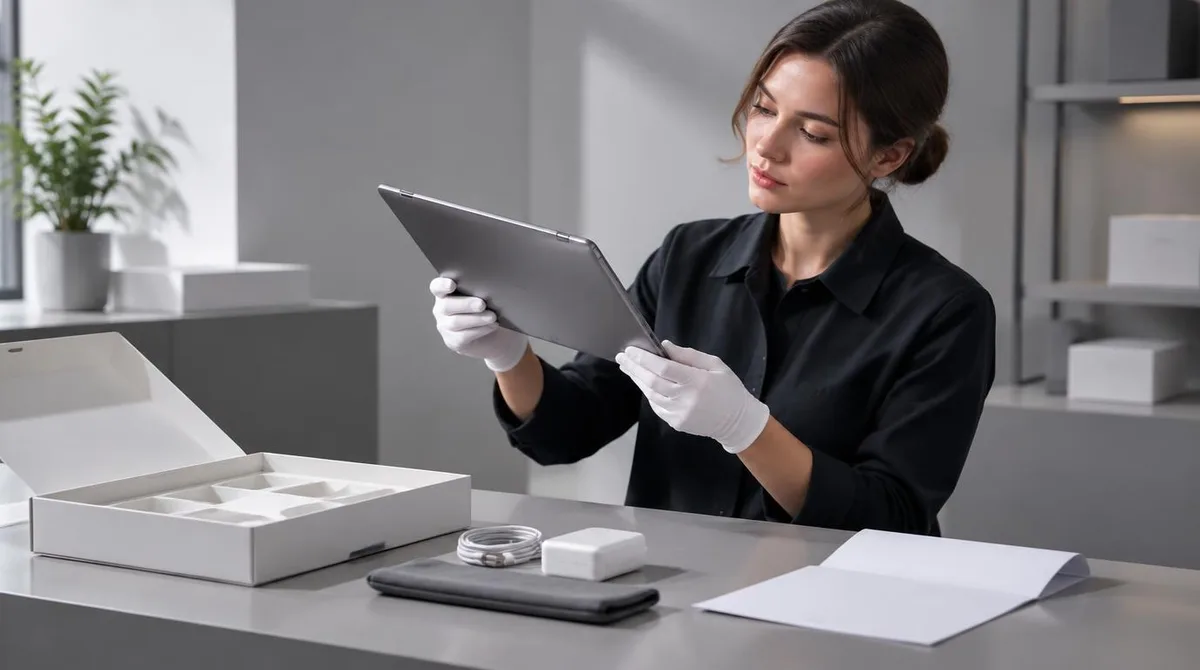
Open box is retail's honest euphemism. The product was sold once, came back, and now costs less because its first owner hesitated. The discount can reach a third of the new price, and the risk can reach a broken hinge. The difference is inspection and paperwork.
The category sits at the light end of the used goods spectrum, typically sold once and returned unused or barely used, and retailers now run dedicated resale channels for exactly this flow of returns. What the grades mean, which categories reward the risk, and the three questions that protect the buyer follow.
The Grades, Translated Into Risk
Open box listings use condition tiers, and each tier is a risk statement. Like-new or excellent means complete accessories, original packaging and no signs of use. That is the lowest-risk tier and the smallest discount. Satisfactory or good means cosmetic wear or missing extras, priced deeper. Damaged-box means the packaging lost the argument with a forklift while the contents are presumed fine, which is often true. The tier system works when the seller describes the reason for return. Listings without a reason are asking the buyer to price the uncertainty blind.
The Categories Where Open Box Wins
Open box rewards categories where the return was a decision, not a defect. Televisions and monitors top the list, since most returns are second thoughts about size, and screens either work or announce it immediately. Small appliances and power tools follow, with motors that show their condition quickly. Headphones and speakers qualify when the seal check is possible. The losing categories are anything with hidden wear: printers with page counts, mattresses with histories, and storage drives whose write cycles are invisible. If the wear cannot be seen or queried, the discount is the fee for finding out later.
The Three Questions Before Buying
Three questions filter ninety percent of open-box risk. First, why was it returned, and does the listing say. Second, what warranty survives, from the manufacturer or the reseller, and when does it start. Third, what is the return window on this purchase itself, since an open-box item that fails in week one needs its own exit. A listing that answers all three is a marketplace with nothing to hide. One that dodges the warranty question is pricing the uncertainty into the discount and handing it over. We covered a connected angle in BOGO Deals Decoded: When Buy One Get One Is Actually a Discount.
The Inspection Ritual at Pickup
Open box purchases in person get a two-minute ritual, and it mirrors the unboxing. Check the accessory list against the listing, count cables and remotes, and power the device through its main function before leaving. Photograph any existing wear, since the documentation anchors a dispute. For shipped open box, the ritual moves to the delivery video, which platforms increasingly accept as evidence. The ritual sounds paranoid and reads, in practice, like the two minutes of diligence the discount is paying for.
The Grade Glossary, in One Paragraph
Retailers label open box with overlapping words, and one paragraph decodes them. Like-new or excellent means complete, clean and indistinguishable from new in the dark. Very good or satisfactory means light cosmetic wear, complete function, maybe a missing extra. Good or acceptable means visible wear, tested function, and the deepest discounts. Damaged box means the packaging lost and the contents won, usually the best value in the tier system. Certified open box means the retailer inspected and graded it with a backing guarantee, which prices a little higher and sleeps a lot better.
Conclusion: The Discount Is Paying for Your Diligence
Open box items are returns with a second chance and a real discount, and the purchase rewards exactly three behaviors: read the grade and its reason, settle the warranty question in writing, and inspect like the discount expects you to. Screens, tools and appliances in like-new grades are the sweet spot, and invisible-wear categories are the trap. The price gap is the payment for the check. What the household buys open is your call. More return mechanics, including How online returns actually work — and what the law requires, wait in the Retail hub.