Back-to-school sales creep is documented, not imagined: industry surveys from the National Retail Federation have shown for years that most back-to-school families start shopping at least three weeks before school starts, with a growing share starting two months out or earlier — and retailers have responded by pushing promotions from August into June and July. The result is a season that now stretches most of the summer, with the same total budget spread across more weeks of selling. Data described here reflects NRF back-to-school surveys and US retail practice as of July 2026; prices are subject to change after the date shown.
What does the NRF data actually show?
The National Retail Federation has run annual back-to-school surveys for two decades, and two findings repeat consistently across recent editions:
- Per-family spending is large and stable. Households with children in elementary through high school have reported planned back-to-school spending in the mid-hundreds of dollars per child in recent surveys — roughly $850 to $900 per family in the 2023 and 2024 editions — covering clothing, electronics, shoes and supplies.
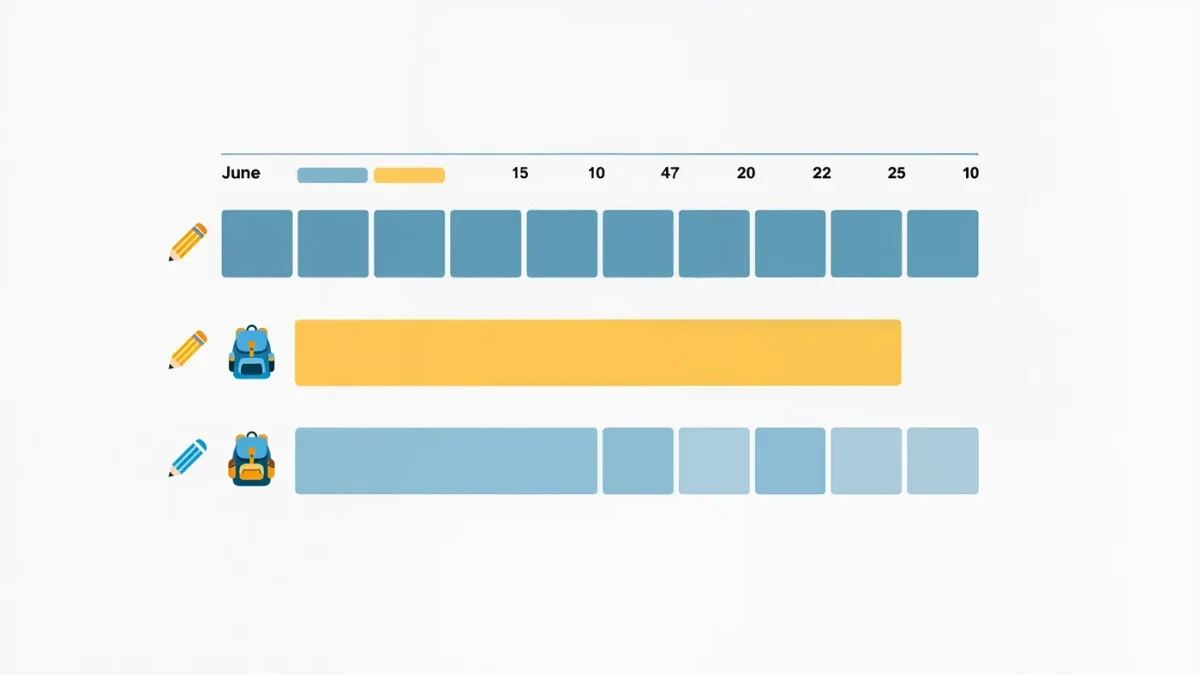
- The start date keeps moving earlier. A majority of families in recent surveys reported starting shopping three weeks to two months before school begins, and the share starting in July or earlier has grown year over year. College-family surveys show the same pattern, with even higher planned spending.
Retailers read the same charts you can. If a documented majority shops early, the profitable move is to be the retailer selling early — and once one major chain moves its back-to-school floor set from mid-July to June, the competitive chain follows. Creep is not a conspiracy; it is an arms race with a published dataset at its center.
How the math works for shoppers — and against them
An illustrative family budget, using the NRF's documented mid-hundreds per-child spending range: $400 per child split across supplies, shoes and clothing. Early shoppers spread that across June and July; late shoppers compress it into one August week. Neither timing changes the total — that is the honest headline. What timing changes is depth per purchase:
| Timing | Typical condition | Risk |
|---|---|---|
| June–early July (creep window) | Full selection, moderate promotions, early "doorbusters" on basics | You may pay near-full price and miss August's best cuts |
| Late July–early August | Promotions cluster; loss-leader supplies at extreme lows (crayons, folders, glue near $0.25–0.50 documented) | Crowds; popular items sell through |
| Late August–September | Final clearances on remaining stock | Broken sizes and empty category shelves |
The documented extreme-low prices on core supplies — the 25-cent crayon boxes and penny-folder promotions supermarkets run against each other in late July — appear in the middle of the season, not the beginning. Creep moved the season's start; it did not move the season's deepest prices.
Does early shopping ever save money?
Yes, for specific categories. Electronics and big-ticket items (laptops, calculators, dorm gear) see their strongest documented promotions in July's mid-summer sales events, which now overlap the creep window. Clothing too: July clearance of summer stock and tax-free weekends in many states stack with back-to-school promotions. The categories where waiting wins are the loss-leader supplies — paper, pens, art materials — where late-July grocery and drugstore price wars are the year's floor. Splitting the season by category beats both extremes.
Who should ignore the creep entirely
Ignore it if you buy supplies from a list the school has not even published yet — July shopping before the list exists is a documented recipe for duplicate purchases. Ignore it if last year's supplies are usable; the most effective back-to-school saving is the purchase that never happens, and no promotion beats a reuse. And ignore the urgency framing: the creep exists to lengthen the selling window, not because August prices are higher. The data says the opposite for core supplies.
Sales creep lengthened the back-to-school season by a month. Your budget does not need to grow by the same month.
Let the retailers start earlier if they like. Buy electronics in July, supplies in the late-July price war, and skip the June aisles entirely.