A fragrance dupe will not cost you the same as the original, and the difference is not a mystery: you are paying for a higher concentration of perfume oil, tested longevity, and a brand's marketing budget. The original at $150 or more can deliver eight or more hours of wear, while a dupe at around $30 to $50 may fade in three to five, because the oil concentration and raw material grade differ. Once you know what the label already tells you, you can decide which half of that price gap you actually care about.
What does the concentration on the label actually mean?
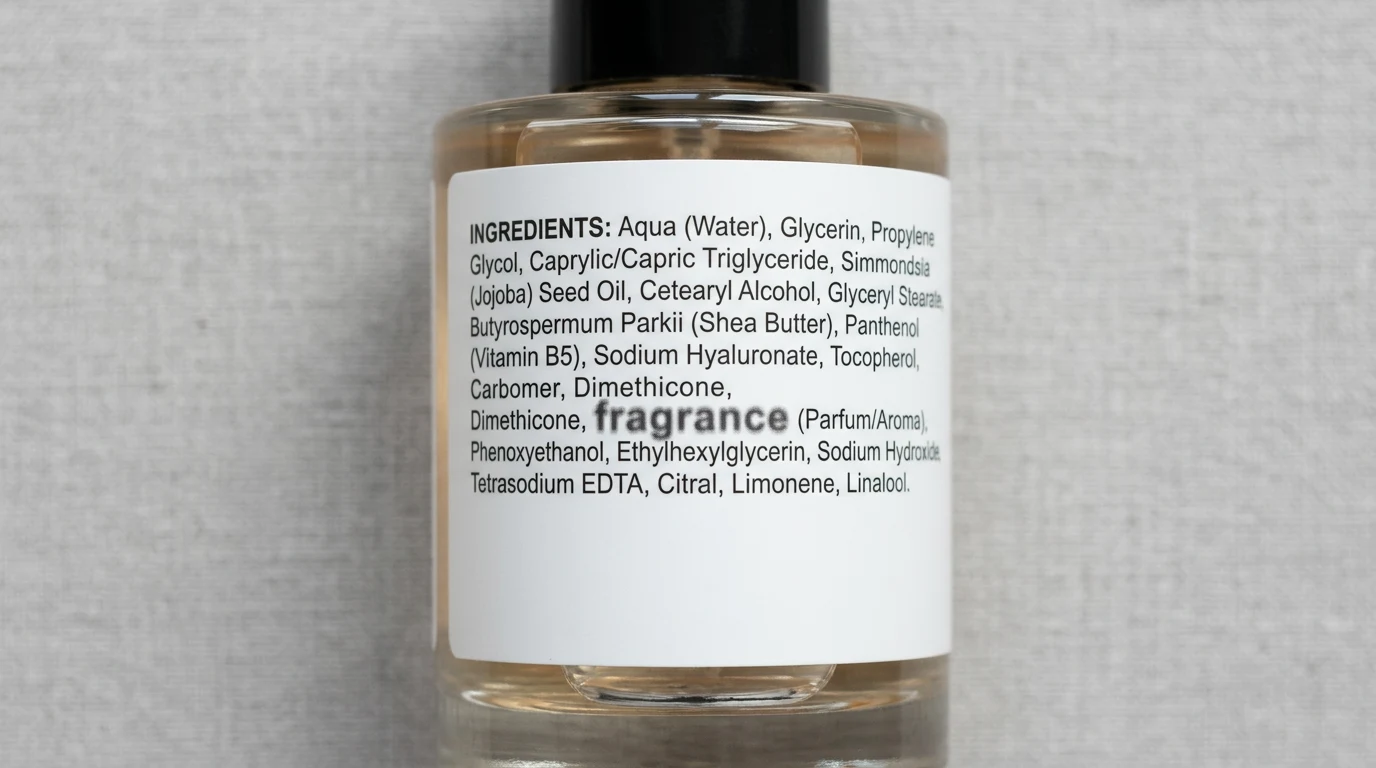
The words on the bottle describe how much perfume oil is dissolved in alcohol. Industry classification, which individual houses document on their own product pages, generally works like this:
- Parfum / extrait: roughly 20–30 percent oil. The most expensive tier per ounce.
- Eau de parfum (EDP): roughly 15–20 percent oil. The most common tier for modern designer launches.
- Eau de toilette (EDT): roughly 5–15 percent oil. Often cheaper, but applies and evaporates faster.
- Eau de cologne (EDC): roughly 2–4 percent oil. The shortest-lived tier.
When a dupe brand sells you its version of a designer scent, it almost always sells an eau de parfum tier product regardless of what tier the original uses. That is why a dupe can smell similar in the first hour and still behave differently across the day: the oil percentage and the quality grade of aromachemicals set the wear curve.
Why does the original cost so much more per ounce?
Perfume is one of the highest-markup categories in retail. The juice itself — alcohol, oils, and aromachemicals — is rarely the main cost. Analysts who have taken apart the perfume supply chain, including a widely cited BBC Business Daily breakdown of fragrance economics in 2023, describe juice costs commonly estimated at a small fraction of the shelf price, with the rest going to packaging, advertising, celebrity contracts, department store margins, and the brand's own margin. Those costs do not exist for a dupe brand, which uses a simple bottle, sells direct-to-consumer online, and spends little or nothing on print campaigns.
As an illustrative, honestly marked example rather than a quote of any specific invoice: a 3.4 oz bottle of a designer eau de parfum has commonly listed in the $140–$170 range in US retail as of late 2025, while popular dupe houses sold their comparable 1.7 oz bottles for roughly $30–$60. Run the per-ounce math and the gap can exceed ten to one. The question is what portion of that gap buys you a better product versus a prettier box.
How the longevity math works
Longevity is where concentration economics become personal. A parfum-tier original applied in the morning may still be detectable after ten hours; a dupe at EDP tier may need a midday reapplication. Two practical consequences follow:
- If you would reapply a dupe twice a day, one ounce of dupe lasts roughly a third as long as one ounce of an original you apply once. That shrinks the per-ounce price gap you calculated.
- If you apply the original once and are done, the original's cost per day of wear drops. A $160 bottle worn 300 times costs about $0.53 per wear; a $40 dupe worn 150 times before reapplication drains the bottle costs about $0.27 per wear — closer than the sticker prices suggest.
That arithmetic, not brand loyalty, is the honest way to compare the two. Cost per wear is a concept we use across categories, from coats to fragrances.
What about the scent itself?
Fragrance dupes usually target the opening and heart of a fragrance — the notes you notice in the first hour — because those are built from identifiable, widely available aromachemicals. The harder part to copy is the drydown and the blend of naturals (real jasmine, iris butter, sandalwood) that a house has sourced and balanced for decades. As fragrance houses' own marketing documentation is careful to say, and as the BBC's 2023 reporting on the industry echoed, a formula can have hundreds of ingredients, and substituting cheaper ones changes how the scent evolves on skin.
So the realistic expectation is: similar first impression, less distinct drydown, shorter wear. For an office scent you like but do not love, that trade is often fine. For a scent tied to a specific memory, dupes tend to disappoint.
When is the dupe the smarter buy?
- You are testing a scent family. Spending $35 to learn you do not actually like amber-forward fragrances beats spending $160 to learn the same thing.
- The scent is a crowd-pleaser, not a signature. If two bottles smell 85 percent the same for the first four hours, the cheaper one wins for everyday rotation.
- You already own the original. A dupe can stretch a discontinued or reformulated favorite for casual days while the original is reserved for evenings.
When is the original worth it?
- You wear it daily. Cost per wear collapses quickly at high usage; the premium spreads over hundreds of applications.
- Longevity matters to you. If reapplication is a hassle or you dislike the alcohol blast of re-spraying, concentration is a feature you are genuinely paying for.
- The drydown is the point. Signature scents live in the hours three to eight, which is exactly where dupes are weakest.
How do you shop for a dupe without wasting money?
- Check the concentration tier on both bottles and compare like with like.
- Buy the smallest size available first. Every dupe house sells travel or 10–15 ml decants; the per-ounce penalty is worth the information.
- Wear it for a full week, not an afternoon, before deciding whether the original is necessary.
- Watch for reformulation on the original side too: houses quietly adjust formulas, so the $160 bottle you smelled in 2022 may not be the one sold in 2026.
Bottom line
The dupe question is not "do dupes work?" — it is "which parts of the original's price am I actually using?" If you wear a fragrance a few times a month, care mainly about the first hours, and are exploring, a dupe's math wins. If you wear one scent daily and value how it develops across the day, the original's concentration and sourcing are paying their way. Read the tier, run cost per wear, and let the arithmetic rather than the bottle decide.